Money Ledger Book for Kids KDP Interior: A Practical Tool for Teaching Financial Literacy
Teaching children how to manage money is one of the most valuable life skills a parent or educator can impart. Yet finding the right resources that are both engaging and structured can be challenging. That’s where a Money Ledger Book for Kids KDP Interior comes into play. This article explores what this interior is, the common challenges around kids’ financial education, and how this ready-to-use template can help you create a meaningful learning experience for young learners.
What Is a Money Ledger Book for Kids KDP Interior?
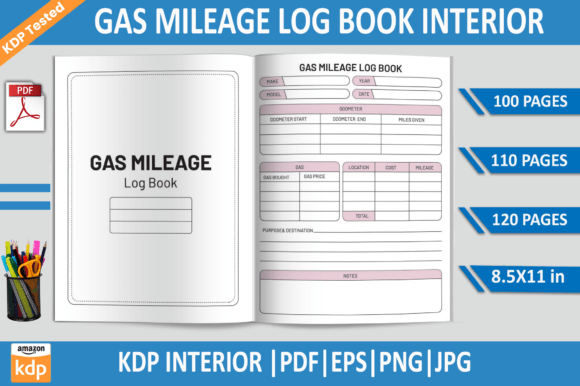
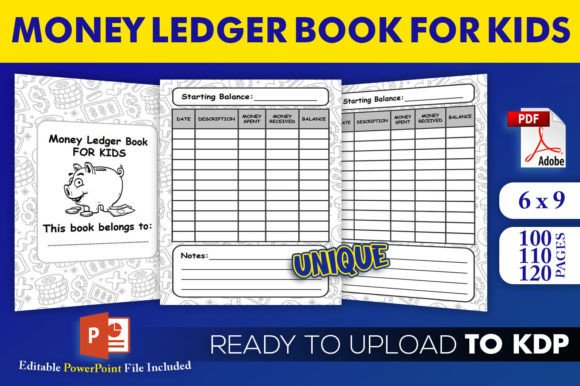
A Money Ledger Book for Kids KDP Interior is a pre-designed, print-ready template that you can use to create a physical ledger book for children. It is intended for self-publishing on Amazon KDP (Kindle Direct Publishing) or for at-home or classroom printing. The download includes an editable source file in PowerPoint (PPTX) and three PDF interiors with trim size 6×9 inches, bleed, and high resolution. The three PDF versions offer 100, 110, and 120 pages respectively, giving you flexibility to choose the right length for your project.
These interiors are not just blank pages—they are thoughtfully laid out with spaces for kids to record income (like allowance or gift money), expenses, savings goals, and balances. The design is kid-friendly yet clean, making it easy for children as young as six or seven to start tracking their own money with a little guidance from an adult.
Why Kids Need a Money Ledger: Understanding the Challenges
Financial literacy is rarely taught in schools in a structured way. Many children grow up without understanding the basics of earning, saving, and spending wisely. Parents often struggle to find age-appropriate tools that are not too childish or too complex. Common challenges include:
- Lack of engagement: Traditional accounting ledgers look boring to kids and are not designed with their cognitive level in mind.
- Inconsistent tracking: Without a dedicated place to record transactions, kids lose track of their money and miss out on the learning process.
- No clear structure: Parents may not know how to organize lessons around money management, and workbooks from stores are often one-size-fits-all.
- Limited customization: Pre-printed books cannot be tailored to a family’s specific allowance system, savings goals, or teaching style.
These obstacles can make it harder to build good money habits early. A Money Ledger Book for Kids KDP Interior addresses these issues directly by offering a flexible, ready-made template that you can customize and print to meet your child’s exact needs.
How the Money Ledger Book for Kids KDP Interior Helps
This interior is designed to turn abstract concepts into concrete actions. Here’s how it helps solve the challenges mentioned above:
- Kid-friendly design: The layout uses clear headings, simple columns for date, description, income, expense, and balance, and often includes fun icons or spaces for stickers—making tracking feel like a game rather than a chore.
- Structured learning: With 100, 110, or 120 pages, the interior provides enough space for weeks or months of tracking, helping children build consistency and see patterns in their spending.
- Customizable via PowerPoint: The editable PPTX file lets you add your child’s name, change titles, tweak categories, or even insert savings goal trackers. Parents can create multiple versions for different children or update as the child grows.
- Ready for KDP or print: The PDFs are print-ready with bleed and 6×9 inch trim size, so you can upload directly to Amazon’s KDP platform or print at home. This gives you the freedom to produce a professional-quality book without design skills.
By using a Money Ledger Book for Kids KDP Interior, you move from hoping your child learns about money to actively providing them with a tool that reinforces good habits every day.
Practical Applications and Real-World Use
Let’s look at how different families and educators might use this ledger.
Household Allowance Tracking
Many parents give regular allowances—weekly or monthly—in exchange for chores or as a flat sum. With the ledger, the child records each allowance payment as income, then subtracts purchases like candy, toys, or apps. Over time, the child learns that when money is spent, the balance decreases. This is a foundational lesson in budgeting. Parents can review the ledger with the child weekly, discussing choices and encouraging savings for larger goals.
Savings Goal Projects
Suppose a child wants to buy a new video game that costs $40. Using the ledger, they can set a savings goal at the top of a page and then track every dollar saved. Seeing the balance grow over days or weeks builds patience and delayed gratification. The Money Ledger Book for Kids KDP Interior can be adapted in the PPTX file to include a dedicated savings goal section with a progress bar or thermometer chart, making the achievement visual and exciting.
Classroom or Homeschool Economics Units
Teachers and homeschool parents can use the ledger as part of a mini-economy system. Students earn “classroom dollars” for completing assignments or good behavior, and then use the ledger to track their earnings and spending at a class store. This hands-on approach makes economics real. Because the interior has multiple page counts, you can print enough pages for an entire school year or semester, depending on the class size. The 100-page version might be ideal for a short unit, while the 120-page version works for ongoing use.
Teaching Difference Between Needs and Wants
Another practical use is to categorize expenses. In the editable PPTX, a parent or teacher can create columns that list “Item,” “Amount,” and “Need or Want?”. The child then reflects before each purchase, reinforcing thoughtful spending. The ledger becomes a dialogue starter rather than just a record book.
Different User Approaches: Tailoring the Interior to Your Needs
Not every child learns the same way, and not every adult has the same goals. Here’s how different users might approach the Money Ledger Book for Kids KDP Interior:
- Parents of young children (ages 5–8): They might use the 100-page version, keep it simple with just “Money In” and “Money Out,” and help the child fill it in. The focus is on introducing the concept, not on precision. They might also use stickers as rewards for consistent tracking.
- Parents of older children (ages 9–12): They may opt for the 120-page version and include more detailed categories like “Charitable Giving,” “Long-Term Savings,” and “Fun Money.” The editable PPTX allows adding columns for interest or percentage-based savings.
- Teachers using it for a class of 25 students: They could print the PDFs in bulk, possibly using the bleed version with trim marks for a clean cut. They might also modify the PPTX to include a school logo or specific classroom currency name. The 110-page version could be a good middle ground for a semester-long project.
- Homeschoolers integrating financial literacy into math: They can use the ledger as a math workbook, having kids calculate totals, check if spending matches budget, and even compute percentages for saving goals. The high-resolution interiors ensure that numbers and lines are crisp, even after photocopying.
- Self-publishers creating a product for KDP: The interiors are ready to upload—just add a front and back cover, and you have a complete low-content book. The fact that they are “tested on KDP” means you avoid common formatting rejections. You can sell the book as part of a series or as a standalone educational tool.
Recommendations for Getting the Most Out of Your Interior
To maximize the benefit of a Money Ledger Book for Kids KDP Interior, consider these practical tips:
- Customize before printing: Open the PPTX file and add your child’s name, preferred currency symbol, and any special categories. If your child has a savings goal, include a dedicated page at the front. This personal touch increases engagement.
- Set a regular check-in routine: Use the ledger weekly, not just when money is spent. Consistency builds habit. Sit down together for ten minutes every Sunday evening to update the ledger and talk about next week’s plans.
- Pair with a real bank or piggy bank: The ledger records what’s in the purse or bank account. For younger kids, having a physical piggy bank alongside the ledger reinforces the connection between numbers and actual coins.
- Print on thick paper: Since kids will handle the book often, print the PDFs on sturdy paper. The high-resolution interiors retain quality even on home printers. For a professional finish, consider a print shop.
- Use the bleed version for KDP uploads: If you plan to publish, choose the PDF with bleed (usually marked in the download). This prevents white edges and ensures the content extends properly for trimming.
- Start with the 100-page version for beginners: A shorter book feels less overwhelming. As the child progresses, you can move to the 110- or 120-page interior for more extended tracking.
Remember that the ledger is just a tool—the real value comes from the conversations and habits it supports. The Money Ledger Book for Kids KDP Interior gives you a solid foundation to build financial literacy in a hands-on, enjoyable way.
Why This Interior Is a Smart Investment for Your Child’s Future
Financial literacy is not only about counting coins; it’s about understanding choices, consequences, and responsibility. A child who learns to track money early is more likely to budget as a teen and manage credit wisely as an adult. The Money Ledger Book for Kids KDP Interior provides an accessible starting point that grows with the child. Whether you are a parent wanting a simple allowance tracker, a teacher creating a classroom economy, or a homeschooler adding structure to your math curriculum, these interiors offer flexibility and ease of use.
By choosing this interior, you are not just downloading a file—you are equipping yourself with a resource that can be adapted over years, printed multiple times, and tailored to each child’s personality and learning style. The editable PowerPoint source file is especially valuable because it lets you evolve the ledger as your child grows from simple recording to more sophisticated budgeting.
Final Thoughts on Practical Implementation
When you begin using the Money Ledger Book for Kids KDP Interior, start small. Set a simple goal for the first month: just have your child write down every time they receive or spend money. Don’t worry about perfect accuracy; focus on building the habit. As the habit forms, you can introduce more features like savings goals, spending limits, or percentage allocations. The ready-made interiors remove the barrier of design and layout, so you can jump straight into the learning process.
The three PDF options—100, 110, and 120 pages—give you control over the length. If your child loves the activity, you can print another copy when the first book is full. Because the file is high resolution, each new print looks clean and professional. And if you decide to share your creation with other parents or publish on KDP, the bleed-compliant interiors are already tested and ready.
In a world where digital distractions are constant, a physical ledger book for kids offers a tangible, screen-free way to learn about money. It encourages handwriting, reflection, and family conversation. The Money Ledger Book for Kids KDP Interior is not just a product—it’s a catalyst for raising financially savvy children, one entry at a time.