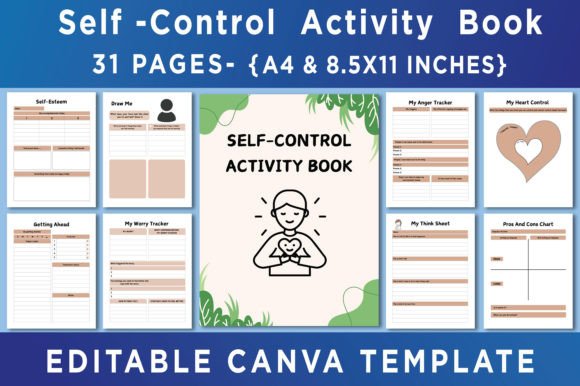
Self-Control Activity Book: A Practical Tool for Emotional Growth
If you work with children, teens, or even adults who struggle with emotional regulation, you know how hard it can be to find resources that actually engage people. Worksheets feel like homework. Lectures go in one ear and out the other. What you need is something interactive, something that feels approachable while still delivering real psychological tools. That is exactly where the Self-Control Activity Book comes in. It is not just another printable packet. It is a thoughtfully designed resource that turns abstract concepts like worry, anger, and self-reflection into concrete exercises anyone can do.
What Makes This Activity Book Different
The first thing you notice when you open this resource is how intentionally it is laid out. There is a clear progression from identifying emotions to tracking them to building strategies for managing them. The checklis including the Belongs To page, the Introduction, and then exercises like Draw Me, My Thought Worries, My Worry Boat, and My Types Of Worries. It does not throw a bunch of random activities at you. Each page builds on the one before it, creating a structured journey toward self-awareness.
Visually, the design is clean and approachable. It avoids the clinical feel of many therapeutic resources. The layout uses plenty of white space, which matters when you are asking someone to sit with uncomfortable feelings. There is room to write, to draw, to breathe. The typography leans toward a friendly sans serif that feels modern without being cold. This is not a resource that talks down to its user. It respects the person doing the work, whether that is a child working with a counselor or an adult journaling on their own.
Who Benefits Most from This Resource
The Self-Control Activity Book is versatile enough to serve multiple audiences. School counselors and therapists will find it useful for one-on-one sessions or small groups. Parents looking for conversation starters with their kids will appreciate how the exercises open the door to discussions that might otherwise feel awkward. Even adults working on their own emotional regulation can use the trackers and reflection pages without feeling like the material is too juvenile.
For creative professionals, this resource is a goldmine. If you are a designer or content creator who works in mental health or education, you can use the Self-Control Activity Book Canva Template to customize the pages for your own clients or audience. The editable Canva link means you do not need advanced design skills to make it your own. You can swap colors, adjust fonts, add your branding, or modify the wording to better fit your specific group. That flexibility is rare in resources like this.
Why the Canva Template Matters for Your Workflow
You have probably bought a digital product before only to realize it is locked into a format you cannot easily edit. That frustration is real. With the Self-Control Activity Book Canva Template, you get around that problem completely. Everything is editable in Canva, which runs in your browser and has a generous free tier. You can change the Belongs To page to include your organization name, adjust the Worry Tracker to use your own categories, or reformat the My Reflection page to better match your branding.
The files included are high-quality PDF, JPEG, and PNG, plus the editable Canva link. That means you can print them directly for clients, upload them to a digital platform, or share them as email attachments. The print-ready PDF files ensure that if you do order physical copies, they will look crisp and professional. No weird margins. No pixelated graphics. Just clean, usable files that make you look like you spent hours designing them.
Important Note: To keep the original link active, always go to your Canva home, make a copy of the document into your own account, and work on that copy. This ensures you never lose access to the original template if you make changes.
Walking Through the Core Exercises
Let me highlight a few of the standout pages and why they work so well. The My Worry Boat exercise is a creative way to externalize anxiety. Instead of just talking about worries, you draw them as cargo on a boat, which makes the abstract feel tangible. The My Anger Tracker and My Safety Tracker give users a concrete way to notice patterns over time. When you see that your anger spikes every Tuesday afternoon, you can start to investigate what is happening then and plan ahead.
The Pros And Cons Chart is straightforward but essential. It teaches decision-making in a structured way that even younger users can grasp. Am I On Track functions as a quick check-in, perfect for starting a session or ending a day. The Don T Let Your Feelings Control You page reframes the user as someone with agency, not someone at the mercy of their emotions. That shift in language is subtle but powerful.
One of my favorite pages is Areas Of My Life That Are Really Important To Me. It reminds the user that self-control is not about suppressing feelings. It is about protecting what matters most. When you know what is important, it is easier to choose responses that align with your values rather than reacting impulsively.
Practical Guidance for Getting the Most Out of It
If you are using this resource with someone else, do not hand them the whole book and walk away. Pick one or two pages that match what they are currently struggling with. The My Worry Time Worksheet is great for someone who feels consumed by anxiety all day. It gives them a designated window to worry, which paradoxically reduces overall worry. The Self-Esteem page works well as a warm-up to build confidence before tackling harder emotions.
For the trackers, consistency matters more than perfection. Encourage the user to fill in the My Worry Tracker or My Anger Tracker at the same time each day. Even three days of data is more useful than zero. Over time, patterns will emerge that give the user real insight into their triggers and coping mechanisms.
The Things That I Control and Things That I Can T Control pages are worth revisiting regularly. Anxiety often comes from trying to control the uncontrollable. Returning to this simple list can be grounding. It is a classic cognitive behavioral therapy tool, and the activity book presents it in a way that feels fresh rather than clinical.
How This Fits into Professional Practice
For counselors, therapists, and social workers, the Self-Control Activity Book can be a go-to resource for homework between sessions. It gives clients something concrete to do that reinforces the work you are doing together. For teachers and school staff, the pages can be used in calm-down corners or as part of a social-emotional learning curriculum. The exercises are short enough to fit into a fifteen-minute block but deep enough to generate meaningful discussion.
If you run a coaching practice or offer workshops on emotional intelligence, you can brand these pages with your logo and include them in client kits. The editable Canva template makes that process quick. You do not need to redesign anything from scratch. Just open the template, drop in your branding, and export.
The Real Value Is in the Reflection
The final pages of the activity book include My Reflection, Getting Ahead, My Notes, and a Final Thought. These are not afterthoughts. They are where the real integration happens. The reflection page asks the user to look back at what they have learned about themselves. The notes page gives space for insights that do not fit neatly into a worksheet. The final thought page ends the journey on a note of encouragement and forward motion.
That is the mark of a well-designed resource. It does not just dump information on you and leave you there. It walks with you through the process and helps you land somewhere meaningful. The Self-Control Activity Book does exactly that, and the fact that you can customize it in Canva makes it a tool you will actually use, not just download and forget.
Whether you are a therapist building your resource library, a parent trying to support a reactive child, or a creative professional who wants to offer high-quality content to your audience, this activity book delivers. It is practical, editable, and designed with real human needs in mind.