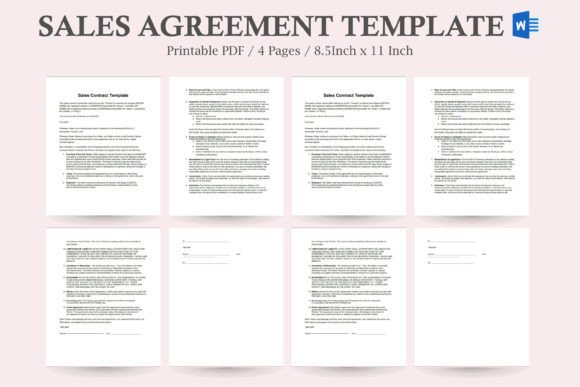
Sales Agreement Contract Template: A Strategic Tool for Protecting Every Transaction
Every business transaction carries risk. Whether you are selling a piece of equipment, handing over a digital product, or transferring ownership of a company, the difference between a smooth deal and a costly misunderstanding often comes down to one thing: the written agreement. A Sales Agreement Contract Template gives you a structured, legally grounded framework that captures the terms of a sale clearly and consistently. Far from being just another piece of paperwork, a well-designed template serves as a strategic asset that protects your interests, clarifies expectations, and saves significant time and money over the long term.
For entrepreneurs, freelancers, small business owners, and professionals in any field, understanding how to use a sales agreement template intentionally rather than reactively can transform the way you approach transactions. Instead of scrambling to draft terms when a deal is already underway, you prepare in advance. This shift from reactive to proactive contracting is one of the most practical moves you can make for your business operations and customer experience.
What a Sales Agreement Contract Template Actually Does for Your Business
A sales agreement contract template is a pre-drafted document that outlines the essential terms of a sale between a seller and a buyer. It typically covers the description of goods or services, purchase price, payment terms, delivery details, warranties, and liability limitations. But a template is not merely a form to fill in the blanks. When used thoughtfully, it becomes a consistent framework that ensures every transaction is handled with the same level of professionalism and legal rigor.
The strategic value lies in repeatability. If you sell the same product or service multiple times, using a consistent template means you do not reinvent the legal structure every time. You focus your energy on the variables that matter for each specific deal rather than worrying about missing a clause or overlooking a critical term. This directly supports productivity and operational efficiency, especially for small teams where every hour counts.
Beyond efficiency, a sales agreement template helps with brand positioning. When you present a clear, professional contract to a buyer, you signal that you are organized, serious, and trustworthy. That impression can be the deciding factor in securing a deal, particularly when the buyer is evaluating multiple sellers or providers. In competitive markets, professionalism in documentation is an understated differentiator.
Aligning Your Sales Agreement Template with Your Business Goals
Many people treat sales contracts as a formality to be dealt with after the real work is done. That approach misses the point. A sales agreement contract template should be part of your planning from the beginning. Before you even start marketing a product or service, you should have a clear picture of the terms you are willing to offer and the conditions under which you will walk away from a deal.
When you design your template around your specific business goals, you build in protections that support your long-term strategy. For example, if your goal is to build recurring revenue, your template might include terms that facilitate subscription billing or automatic renewals. If your goal is to minimize post-sale disputes, you would invest extra attention in the warranty and return policy sections. If you are focused on scaling, your template should be easy to customize without requiring legal review for every minor change.
This alignment between the contract and the business model is often overlooked. A generic template pulled from the internet without adjustment may actually work against your goals. It might include terms that are irrelevant to your industry or omit protections that are essential for your specific type of sale. Taking the time to tailor a sales agreement contract template to your actual operations is a strategic decision that pays dividends every time you use it.
When to Use a Sales Agreement Contract Template
A sales agreement contract template is appropriate in a wide range of scenarios, but the key is knowing when it is essential versus when a simple invoice or receipt might suffice. For any transaction where the value is significant, where the product or service is complex, or where the buyer and seller do not have an established relationship, a formal written agreement is strongly recommended.
Common use cases include:
- Business-to-business sales where purchase orders and invoices alone may not capture all the terms.
- Sale of high-value assets such as equipment, vehicles, or intellectual property.
- Service-based transactions where scope of work, timeline, and payment milestones need clear definition.
- Business sale agreements where the transfer of ownership involves multiple moving parts, including assets, liabilities, and goodwill.
- Online or remote sales where face-to-face negotiation is not possible and written documentation is the primary record of the deal.
A smart approach is to have a tiered system. For low-value, routine sales, a streamlined version of your template may be sufficient. For high-stakes or complex deals, you can expand the template with additional clauses or consult legal counsel. The template gives you a foundation that you can build upon rather than starting from zero each time.
Practical Considerations Before You Adopt a Template
Before you download a sales agreement form and start using it, take time to think through the variables that matter most for your specific context. No template, no matter how well designed, can anticipate every situation. Your job is to ensure the template you choose or create reflects the realities of your business.
Start by listing the key terms that every sale in your business must include. This might be the payment schedule, delivery method, acceptance criteria, or dispute resolution process. Then, identify the terms that vary from deal to deal so you know which fields need to be customizable. A good template makes the fixed terms easy to keep consistent and the variable terms easy to adjust.
Another important consideration is jurisdiction. Sales laws vary by state or country, and a template created for one region may not be enforceable in another. If you sell across borders, pay particular attention to governing law, venue, and tax implications. While a template cannot replace qualified legal advice, it can serve as a starting point that you can adapt with the help of a professional.
Many users of seller agreement templates assume that once the document is signed, the work is done. In reality, the contract is only as good as your ability to manage it. Keep organized records of signed agreements, payment receipts, and any amendments. This documentation becomes your evidence if a dispute arises and also helps you track performance obligations and deadlines.
Realistic Risks of Using a Sales Agreement Contract Template Without Clear Context
Templates offer convenience, but they also carry risks if used carelessly. The most common mistake is treating the template as a final document rather than a starting point. A sales contract template that is not adapted to the specific transaction can create more problems than it solves. Ambiguous language, missing terms, or clauses that contradict the actual deal can lead to confusion, disputes, and even legal liability.
Another risk is over-relying on the template to cover situations it was never designed for. For example, using a simple product sale template for a complex business sale agreement may omit critical provisions related to liabilities, non-compete clauses, or asset allocation. The result is a contract that looks professional on paper but leaves significant gaps in protection.
There is also the risk of complacency. When you use the same template repeatedly, you may stop reading it carefully. This can lead to missed updates when laws change or when your business model evolves. Set a regular review cycle for your template. At least once a year, revisit the language to ensure it still aligns with your operations and the legal environment.
How to Approach Your Sales Agreement Contract Template Intentionally
Using a sales agreement template intentionally means starting with clarity about what you want the document to accomplish. Think beyond just "getting the deal in writing." Consider what could go wrong in the transaction and how the contract can prevent or resolve those issues. A template that anticipates problems is far more valuable than one that simply records the happy path.
For example, if you sell digital products, your template should address delivery methods, license scope, and usage restrictions. If you sell physical goods, focus on shipping terms, risk of loss, and inspection periods. If you provide services, define the scope precisely, including what is not included. These details turn a generic form into a practical tool that supports real-world outcomes.
When you fill out the template, write clearly and avoid ambiguous language. If a term could be interpreted in multiple ways, clarify it in the document. The extra few minutes spent on precise wording can save hours of back-and-forth later. If you are unsure about a particular clause, consult someone with legal experience rather than leaving it vague.
Finally, keep the buyer's experience in mind. A contract that is unnecessarily complex or one-sided can create friction and damage trust. Aim for a balanced agreement that protects both parties. This approach not only reduces the likelihood of disputes but also strengthens your reputation as a fair and reliable seller.
Maximizing Long-Term Value from Your Sales Agreement Template
The true value of a sales agreement contract template reveals itself over time. Each time you use it, you refine your understanding of what works and what needs adjustment. Pay attention to patterns in your transactions. Are there certain terms that frequently become points of negotiation? Are there clauses that have caused confusion? Use those insights to improve your template incrementally.
Consider building a simple library of clauses or addendums that you can drop into your template for specific situations. For example, you might have a standard non-disclosure clause, a payment plan addendum, or a special warranty provision. This modular approach gives you flexibility without sacrificing consistency.
If you operate in a regulated industry, keep your template updated with changes in compliance requirements. A template that is out of date with current regulations is not just ineffective it can actively expose you to risk. Regularly review your template against your actual business practices to ensure alignment.
For business owners planning an exit or sale of the company itself, having a clean history of well-documented sales agreements can be a significant asset. Potential buyers or investors will view organized, consistent contracting practices as a sign of operational maturity. The small investment you make in your template today supports not only current transactions but also your long-term credibility and value.
Practical Steps to Get Started with Your Sales Agreement Contract Template
Begin by identifying the most common type of sale you conduct. That is your starting point. Search for a template that matches that specific transaction whether it is a product sale, service agreement, or business sale agreement. Look for a template that is editable, professionally designed, and includes the key terms relevant to your industry.
Once you have a template, customize it before you ever use it for a real transaction. Remove any sections that do not apply, add clauses that address your specific risks, and adjust the language to match your brand voice. Test the template on a low-stakes transaction first to see how it works in practice.
Store your template in an accessible location and establish a simple process for filling it out. If you use digital documents, consider creating a fillable PDF or Word file that makes it easy to enter transaction-specific details without altering the core language. The easier the template is to use, the more likely you and your team will use it consistently.
A sales agreement contract template is not a substitute for legal advice, but it is a powerful tool for consistency, professionalism, and risk management. When you approach it strategically and use it intentionally, it becomes one of the most practical investments you can make in your business operations. Every transaction documented clearly is a transaction less likely to become a dispute, and every dispute avoided is time and money saved that you can reinvest in growing your business.
Secure your transactions with clarity and confidence. A well-chosen and well-used sales agreement contract template is not just a document it is a foundation for sustainable, professional commerce.