Streamlining Restaurant Operations with the KDP Restaurant Reservations Book Unique
Behind every smooth dining service lies a system of coordinated movements, timed accurately and executed reliably. While online booking platforms handle the initial pulse of reservations, the on-the-ground logistics during service require a focused, tactile command center. The KDP Restaurant Reservations Book Unique serves this exact purpose. It is a practical, structured tool designed to translate incoming digital bookings into an actionable, real-time seating plan. For restaurant owners, managers, and hospitality professionals seeking to refine their daily workflow, moving beyond scattered sticky notes or complex spreadsheets to a dedicated reservation log is a strategic step toward operational clarity.
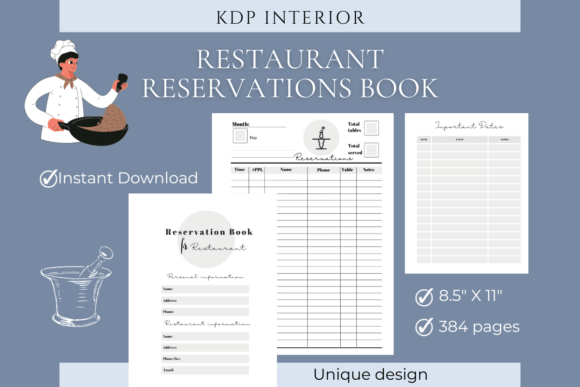
This article explores how this specific resource—with its 384 pages, undated daily spreads, and integrated support sections—fits into the broader processes of running a food service business. We will examine its role in preparation, service execution, post-shift analysis, and long-term business planning, providing practical implementation insights for busy professionals.
The Role of a Dedicated Reservation System in Daily Workflow
Many small to mid-sized restaurants begin with generic notebooks or desktop spreadsheets to track reservations. While these tools can work in the short term, they often break down under the pressure of a full house. A double-booking, an illegible note, or a missing page can disrupt the entire service rhythm. The KDP Restaurant Reservations Book replaces this ambiguity with enforced structure. Its dedicated daily pages compel a consistent process for recording every critical data point: party size, arrival time, special occasions, seating preferences, and contact details.
This structure directly supports the pre-service briefing workflow. A manager can review the book in the afternoon, identify high-turnover tables, pre-assign sections to waitstaff, and alert the kitchen to expected volume. By standardizing how reservation data is captured and reviewed, the book acts as a quality control mechanism. It reduces errors, improves team communication, and establishes a single source of truth for the front-of-house team. The undated nature of the 366 daily pages means you can begin using the book at any point in the year without wasting pages on inactive periods, making it a flexible asset for seasonal or newly opened establishments.
Leveraging the 366 Undated Pages for Adaptive Planning
The choice of an undated format is a practical design decision that directly impacts a restaurant's operational flexibility. An operator can skip slow days, wrap up a month mid-page, and start a new season without guilt or wasted paper. This flexibility enhances the preparation phase of the workflow.
- Before Service: A manager flips to the next blank spread and fills in the date. They begin allocating tables based on forecasted capacity, mark known VIPs, and note any large parties expected. This proactive planning sets the tone for an organized shift.
- During Service: The book becomes a live operational document. As parties arrive, servers or hosts mark them seated. Walk-ins are slotted into empty spaces. Delays or special request changes are noted in real-time. This live updating creates a shared mental model for the entire front-of-house team, reducing confusion at the host stand.
- After Service: The completed page offers a wealth of actionable data. How many covers did we actually do versus the forecast? Did the 8:30 PM wave arrive late? This feedback loop directly informs future decisions on staffing levels, inventory ordering, and menu preparation, turning the simple act of logging reservations into a continuous improvement process.
The format of the KDP Restaurant Reservations Book (8.5 x 11 inches) ensures that the daily spread is large enough to be read at a glance, even in a dimly lit or busy host stand area. The high-quality PDF files provided mean that the print output is crisp, consistent, and professional, reinforcing the brand's attention to detail.
Integrating Important Dates, Contacts, and Notes into Business Processes
Beyond daily reservations, the KDP Restaurant Reservations Book Unique includes dedicated sections for Important Dates, Contacts, and Notes. These are not merely filler pages; they are strategic tools for managing the interconnected workflows of a hospitality business.
Important Dates and Calendar Integration
This section can be used to track external events that directly impact business volume, such as local festivals, sports games, or conventions. It also serves as a place to log internal scheduling deadlines, wine delivery dates, and seasonal menu changeover days. By centralizing this information, the book bridges the gap between the marketing calendar and the operations calendar.
Contacts as an Operational Resource
Moving beyond guest names, the Contacts section is ideal for logging information about food purveyors, wine representatives, linen services, and equipment repair technicians. When a crisper fails during a Sunday brunch, having immediate access to the relevant contact number in your reservation book is far more efficient than searching through emails or a phone directory. This transforms the book from a simple log into a decentralized operations manual.
Notes for Continuous Quality Control
The Notes section is a powerful tool for documenting process changes, training notes, or feedback from regular guests. A manager might use it to outline a new wine-by-the-glass program or to record a specific allergy protocol discussed during a pre-shift meeting. Over time, this section becomes a valuable archive of institutional knowledge, helping to maintain consistency even as staff changes occur.
Practical Implementation and Integration with Digital Tools
Integrating a physical reservation book into a modern restaurant environment does not mean abandoning technology. It means using the right tool for the right phase of the workflow. The KDP Restaurant Reservations Book is designed to work alongside digital systems, not in competition with them.
Bridging Online Booking and Floor Management
Many reservations arrive via online platforms or a website widget. A designated staff member transfers key details—time, party size, special occasion, and any notes—into the book. This act of transcription forces a human review of every booking, catching errors or special requests that might get lost in a digital feed. The physical book then takes over during service, where its tactile, glanceable layout is superior to scrolling through a tablet.
Preparation and Setup Tips
Before the first shift, users should establish clear conventions for symbols. For example, a circle for booked, a check for arrived, and an "X" for a no-show. Laminating a small key and attaching it to the cover can help train new staff quickly. The 384 PDF files allow for precise print management. Print an entire service week at once and place the pages in a dedicated folder or binder. The high-quality files ensure that reprints match the original pages exactly, maintaining consistency throughout the year.
Ensuring Team Adoption
Introduce the book during a pre-shift meeting. Walk the team through how to read the layout and how to update it during service. Consistency in use by every team member is what unlocks the book's full potential for efficiency. When everyone is trained to look at the book for the current floor status, it reduces verbal interruptions and allows the team to operate more autonomously.
Long-Term Consistency and Archival Value
Over a full year, the 366 daily pages accumulate into a comprehensive archive of the restaurant's operations. This is where the resource provides immense long-term value for business planning and analysis.
- Trend Analysis: Reviewing last year's book reveals seasonal patterns. Which days of the week are consistently busy? What was the impact of the summer lull? This historical data is invaluable for making informed decisions about staffing budgets, marketing campaigns, and inventory orders for the upcoming year.
- Building a Culture of Precision: When a team consistently uses a high-quality, structured tool, it sets a standard for discipline and attention to detail. It communicates a level of professionalism to both staff and guests. The physical presence of the book at the host stand also keeps the team focused on the physical flow of the dining room, rather than getting distracted by digital devices.
- Scalability: As the restaurant grows or opens new locations, the system established by this book scales effortlessly. A multi-unit operator can use the same format across locations, ensuring standardized reporting and a unified operational language. The digital nature of the PDF files ensures that the format can be replicated exactly, preserving brand consistency and training simplicity.
A High-Yield Operational Asset
The KDP Restaurant Reservations Book Unique is more than a place to write down names for the evening. It is a carefully designed tool for orchestrating a complex hospitality workflow. From pre-shift planning and live service execution to post-shift analysis and annual trend spotting, its structure enforces consistency, reduces friction, and captures invaluable business data. For the restaurant owner, manager, or hospitality entrepreneur looking to refine their operational process, it represents a straightforward, high-leverage investment in the daily rhythm and long-term health of their business.