Daily Spiritual Growth Goals KDP: A Practical Asset for Your Publishing Workflow
If you are building a Kindle Direct Publishing business around mindfulness and self-development, you have likely noticed the steady demand for journals that help people structure their inner work. The Daily Spiritual Growth Goals KDP product is designed to meet that demand with a ready-to-publish format. This article explains what the journal offers, how it fits into a publisher’s workflow, and how you can integrate it smoothly into your KDP catalog from preparation through long-term use.
What Daily Spiritual Growth Goals KDP Brings to Your Catalog
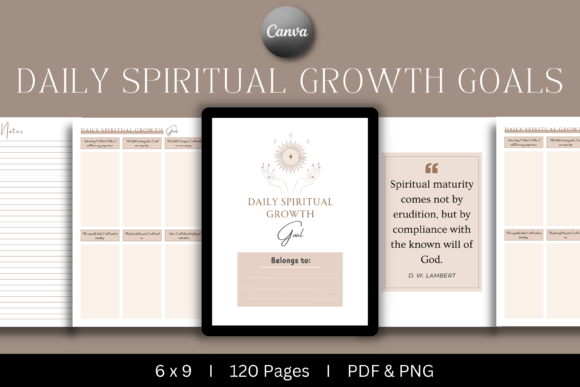
At its core, this journal provides a framework for individuals who want to set daily intentions, reflect on their spiritual progress, and build a consistent practice. For a publisher, the value lies in the complete asset package: a professionally designed interior, tested print-ready files, and editable templates. You are not starting from scratch. Instead, you receive a product that is ready to upload after minimal customization, allowing you to focus on listing optimization and audience outreach.
The journal includes a welcome page, quotes pages, a main goal-setting section, notes pages, and a total of 120 pages. The file is formatted with bleed at 6x9 inches, tested for KDP compliance, and delivered in PDF, PNG, and editable formats (Canva template with Pro account and PowerPoint). This combination means you can publish with confidence that the interior will print correctly, and you can also make adjustments if you want to add your own branding or tweak the layout.
Where the Journal Fits in Your Publishing Process
Every KDP publisher knows that efficiency matters. The Daily Spiritual Growth Goals KDP product can be used at multiple points in your workflow, not just as a one-off upload. Here are three common scenarios:
Before Launch: Building a Thematic Series
If you are planning a series of spiritual or mindfulness journals, this product can serve as a foundation. Because it comes with an editable Canva template and PowerPoint file, you can modify colors, fonts, or page order to create variations—for example, a gratitude-focused version or one centered on morning intentions. This saves you the design time for each new title, while maintaining a consistent interior quality across your catalog.
During Content Creation: Streamlining Your Upload Process
When you are ready to publish, the PDF file is already KDP tested with bleed. You do not need to fiddle with margins or recheck trim sizes. Simply download the PDF, log into KDP, set your interior type to “upload PDF,” and submit. The 120-page count falls within a profitable range for low-content books, and the 6x9 trim size is a standard choice for journals, which makes the listing straightforward to set up.
After Publication: Supporting Ongoing Customer Engagement
Once customers purchase the journal, they will use it as a daily practice tool. You can support this use by creating a simple email sequence (if you collect emails through your author site) that offers tips on setting spiritual goals or using the quotes pages as prompts. This adds value to the purchase and encourages repeat business when you release related products.
Integration with Other Tools and Resources
A successful KDP business rarely relies on a single product. The Daily Spiritual Growth Goals KDP journal interacts well with other assets in your workflow:
- Design tools: The editable Canva template allows you to align the journal’s look with your brand colors or series style. You can also export new versions for different niches—such as Christian spirituality, mindfulness for professionals, or goal setting for creatives.
- Proofing software: Because the PDF is KDP tested, you can skip heavy proofing on the interior. Still, you may want to do a quick visual check using Adobe Acrobat or a free previewer before uploading, especially if you made edits.
- Listing optimization tools: The journal’s theme naturally targets keywords related to spiritual growth, daily goals, mindfulness journals, and self-reflection. Use these as a starting point for your Amazon search terms and book description.
- Marketing platforms: If you have a website or social media presence, you can show sample pages from the quotes or main pages to demonstrate the journal’s structure. This builds trust with potential buyers who want to see the layout before purchasing.
Practical Implementation Tips for KDP Publishers
Getting the journal onto Amazon is only part of the equation. To make the most of this product, consider the following implementation steps:
Preparation Before Upload
Open the PDF file and verify that the welcome page and quotes page match your intended tone. If you want to personalize the journal with your brand name or a short note, use the editable Canva template or PowerPoint file to make those changes. Because the template requires a Canva Pro account, ensure you have access before you start editing. If you don’t use Canva, the PowerPoint file offers a similar level of control. Once your edits are complete, export a new PDF and recheck the bleed settings. The original file is already set for 0.125-inch bleed, so maintain those margins.
Quality Control Checks
Even though the interior is labeled as premium and KDP tested, it is wise to run a quick quality check yourself. Look at the main page layout: does it have enough space for users to write? Are the quotes placed in a way that does not interfere with note sections? Check the page count—120 pages should be accurate, but verify that no pages are blank or duplicated. These small checks prevent customer complaints and returns.
Consistency Across Your Catalog
If you plan to publish multiple journals, use the same template structure across your titles. This creates a recognizable look and makes it easier for customers who buy one journal to feel comfortable buying another from you. You can vary the cover design and theme (quotes, colors, focus area) while keeping the interior layout consistent. This approach speeds up your publishing workflow and builds a cohesive brand.
Organizing Your Files for Long-Term Efficiency
Once you have the Daily Spiritual Growth Goals KDP files, take a few minutes to set up a folder structure that will serve you over multiple releases. Create a master folder for “Spiritual Journals” and subfolders for each title variation. Inside each variation folder, store the editable template (Canva link or PPT file), the PNG version, the PDF with bleed, and any notes about adjustments you made. This organization helps you quickly locate files when you need to update a listing or create a new version.
Because the product includes both print-ready PDF and PNG files, you also have the option to create a digital companion or preview for your website. The PNG files can be used in social media posts or email newsletters to show sample spreads without giving away the full interior.
Workflow Examples for Different Publisher Goals
How you use this journal depends on your broader business strategy. Here are three ways different publishers might integrate it:
- For a new KDP publisher: Use the journal as your first title. The ready-to-upload PDF removes most technical barriers, so you can focus on learning the KDP platform, setting up your author account, and writing a compelling product description. Once the first journal is live, you can use the template to create a second variation quickly.
- For an established creator: Add this journal to a series of self-development products. Pair it with a related low-content book like a gratitude journal or a goal planner. The consistent interior format means you can bundle them or run promotions across the series.
- For a freelance designer or marketer: Use the template as a starting point for client projects. You can customize the Canva template for clients who want a unique spiritual journal without paying for a full custom design. This turns a single product into a service offering.
Usability and Long-Term Value for Your Audience
The people who buy this journal are looking for structure in their spiritual practice. They want to set daily goals, reflect on their growth, and record insights. The inclusion of a quotes page adds inspiration, while the notes section gives them space for deeper thoughts. As a publisher, your job is to ensure the product delivers on that promise consistently.
Because the interior is designed with a clean layout and adequate writing space, users are more likely to finish the journal and feel satisfied with their purchase. This leads to better reviews and word-of-mouth recommendations over time. If you maintain the same quality across multiple titles, you build a reputation as a reliable source for spiritual and mindfulness products.
Observations on Preparation and Compatibility
One detail worth noting is the editable Canva template requires a Pro account. If you do not have a subscription, the PowerPoint file provides a workable alternative. Both formats allow you to change text, colors, and some design elements, but the Canva template offers more flexibility if you want to rearrange pages or add new section headers. Plan ahead so you choose the editing method that matches your skills and budget.
Also, the journal is formatted as a 6x9 inch book with bleed. This trim size is common for journals, but ensure your cover design matches those dimensions exactly. If you purchase a separate cover template or design your own, keep the spine width consistent with 120 pages of interior content. KDP’s cover calculator can help you confirm the exact measurements.
Maintaining Quality Control from Upload to Fulfillment
After you upload the PDF to KDP, use the online previewer to flip through every page. Check that the quotes pages display correctly, the main pages are aligned, and the notes section appears as intended. Because the file is already KDP tested, you should not encounter major issues, but the preview step catches any conversion errors before customers are affected.
If you make any edits to the template, re-export the PDF and verify the bleed settings again. A common mistake is accidentally removing the bleed area, which can result in white borders on the printed page. The original file is set correctly, so only recheck if you modify the layout.
Building a Sustainable Publishing Routine
Once the journal is live, you can move on to your next title. The Daily Spiritual Growth Goals KDP product is designed to be a repeatable asset. Use the same template structure for other journals—for example, a weekly reflection journal or a monthly goal planner. This reduces the time spent on each new book and allows you to build a catalog that feels connected.
Over time, you will learn which themes resonate most with your audience. The quotes and main pages can be adapted to different spiritual traditions or focus areas, giving you room to grow without starting from zero. Keep a running list of ideas for variations based on customer feedback or trending topics in the self-development space.
Final Practical Considerations
The Daily Spiritual Growth Goals KDP journal is more than a single product. It is a foundation that can support your publishing workflow from the first upload through series expansion. The ready-to-use files, tested dimensions, and editable templates remove friction from the technical side, so you can invest your time in marketing, audience building, and creating consistent value for your buyers.
If you decide to add this journal to your catalog, take advantage of the included formats. Use the PDF for immediate publishing, the PNG files for promotional materials, and the editable templates for future customization. This layered approach ensures you get the most out of a single purchase while maintaining the flexibility to adapt as your business evolves.