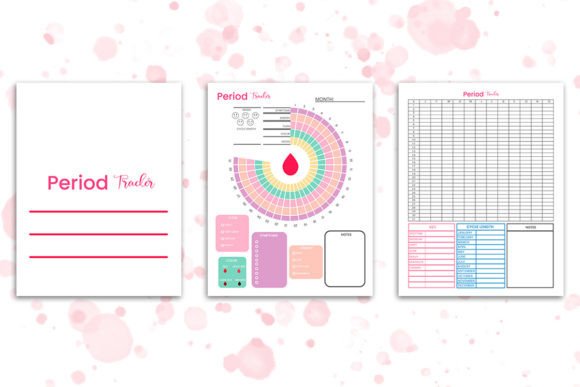
Period Tracker. Period Journal: A Practical Tool for Cycle Awareness and Daily Planning
Tracking your menstrual cycle is one of the most straightforward ways to understand patterns in your energy, mood, and physical well-being. Whether you are managing a busy work schedule, planning creative projects, or simply trying to feel more in tune with your body, a dedicated tracking system helps you see what is happening beneath the surface. Period Tracker. Period Journal is designed for exactly this purpose. It combines the structure of a tracker with the reflective qualities of a journal, giving you a single place to log, observe, and act on cycle data.
This article walks through what this tracker and journal bundle includes, how it fits into real routines, and how you can integrate it into your own workflow. The focus is on practical use, not abstract promises. If you are looking for a way to bring more clarity and consistency to your cycle tracking, this resource gives you the files and framework to do it.
What Period Tracker. Period Journal Includes and Why It Matters
The download contains AI, PDF, and SVG files across three high-resolution pages at CMYK color and 300 DPI. This format is deliberately flexible. You can print the pages, edit them digitally, or incorporate them into a larger planning system. The three pages are designed to cover the essentials without overwhelming you with unnecessary fields or decorations.
Most cycle tracking tools fall into two categories. The first is a bare-bones calendar where you mark start and end dates. The second is a complex journal with dozens of fields that quickly become tedious to maintain. Period Tracker. Period Journal lands in the middle. It gives you enough structure to capture meaningful data while leaving room for your own observations. This balance is important because consistency matters more than complexity. A simple system you actually use every cycle is far more valuable than an elaborate one you abandon after two weeks.
The AI and SVG files mean you can customize the layout if needed. If you prefer to work in a digital planner, use the PDFs. If you want to print physical copies for a binder or notebook, the high-resolution files produce clean, professional results. This flexibility makes the tracker suitable for both paper-based planners and digital workflows.
Understanding Your Cycle as a Workflow
Thinking about your menstrual cycle as a repeating workflow changes how you approach tracking. Every cycle has phases, and each phase brings different physical and mental states. When you know what phase you are in, you can plan your work, social life, and self-care more intentionally.
For example, the week after your period ends often coincides with rising energy and clearer thinking. This is a good time to tackle high-focus tasks, start new projects, or have important conversations. The days leading up to your period might bring lower energy, more introspection, or heightened sensitivity. This is not a flaw in your cycle. It is information. When you track these patterns, you can schedule demanding work during your peak energy windows and reserve lighter tasks for quieter days.
Period Tracker. Period Journal helps you capture these patterns by giving you space to log daily symptoms, mood, flow intensity, and any other observations you find relevant. Over two or three cycles, you will start to see your own rhythm. This is not about forcing yourself into a rigid schedule. It is about aligning your efforts with your natural energy levels rather than fighting them.
Using the Tracker Before, During, and After Your Cycle
One of the most practical features of a period journal is that it works across the entire cycle, not just during menstruation. Here is how you can use each phase of tracking as part of a broader process.
Before Your Period: Preparation and Forecasting
In the days leading up to your period, you can use the tracker to note early signs such as bloating, breast tenderness, mood shifts, or changes in appetite. Logging these observations helps you anticipate what is coming. If you know that your energy typically dips two days before your period starts, you can plan your workload accordingly. If you notice you tend to feel more irritable or anxious, you can schedule fewer meetings or give yourself extra downtime.
This phase is also a good time to look back at previous cycles in the journal. Comparing patterns from one month to the next helps you identify what is consistent and what varies. Over time, you build a personal reference that is far more accurate than generalized cycle advice.
During Your Period: Logging and Observing
During menstruation, the tracker serves as a log for flow intensity, pain levels, and other physical sensations. This data is useful for conversations with healthcare providers if you ever need to discuss irregular cycles, heavy bleeding, or severe cramping. It is also helpful for your own awareness. Seeing concrete numbers and notes rather than vague memories makes it easier to notice changes.
Because the pages are designed for quick use, you can fill in the fields in under a minute. This lowers the barrier to consistency. You do not need to sit down for a lengthy journaling session. A few checkmarks and a short note are enough.
After Your Period: Reviewing and Planning
Once your period ends, take a few minutes to review the completed entries for the previous cycle. What patterns stand out? Were there any surprises? What would you like to adjust next time? This review step turns raw data into actionable insight. You can then apply what you learned to the upcoming cycle.
This before-during-after structure is simple, but it works. It turns cycle tracking from a passive record into an active tool for planning and decision-making.
Integrating the Journal with Other Tools and Systems
Period Tracker. Period Journal is designed to work alongside other resources you already use. It does not require you to abandon your existing planner, calendar, or health app. Instead, it fills a specific role within a larger system.
If you already use a digital calendar for work and personal appointments, you can transfer key observations from your journal to your calendar. For example, marking the start of your period or noting low-energy days helps you plan meetings and deadlines with more realism. If you use a fitness or nutrition app, you can cross-reference your cycle data with changes in appetite, sleep, or exercise performance. Many people find that their workout capacity shifts throughout the month. Tracking these correlations helps you adjust your training schedule without guessing.
The PDF format also works well for sharing with a healthcare provider. You can print a few months of data and bring it to an appointment. Having organized, visual records makes discussions about cycle health more productive. The AI and SVG files give you the option to adapt the layout if there are specific fields you want to add or remove, making it easy to tailor the journal to your needs.
Workflow Examples for Different Goals
Different goals call for different approaches to cycle tracking. Here are three common scenarios and how Period Tracker. Period Journal fits into each one.
Tracking for Conception
If you are trying to conceive, tracking your cycle becomes more detailed. You need to identify your fertile window with reasonable accuracy. The journal gives you space to log cervical mucus changes, basal body temperature if you take it, and other signs of ovulation. Over several cycles, this record helps you understand your cycle length and ovulation timing. You can combine the journal with ovulation test strips or a fertility app for a more complete picture. The key is consistency. Logging daily observations in one place reduces the chance of missing important data.
Managing PMS Symptoms
For those who experience PMS, tracking is a way to separate patterns from random fluctuations. When you log symptoms like bloating, mood swings, fatigue, or cravings, you can start to see when they typically appear and how long they last. This awareness allows you to prepare. If you know you tend to have lower patience three days before your period, you can avoid scheduling difficult conversations or major decisions during that window. You can also share your log with a doctor if symptoms are severe, which supports more informed treatment discussions.
Weight and Health Management
Cycle-related water retention and appetite changes are real. If you are tracking weight or body composition, a period journal helps you interpret fluctuations more accurately. Instead of worrying about a sudden increase on the scale, you can see that it aligns with a specific phase of your cycle. The same applies to exercise performance. If your lifts feel harder one week and easier the next, your cycle is a likely factor. The journal gives you a place to note these observations without overanalyzing them.
Practical Tips for Consistent Use
Getting the most out of any tracker depends on how consistently you use it. Here are a few observations based on real-world use.
- Keep it accessible. Whether you print the pages and keep them in a binder or save the PDF to a folder you open daily, visibility matters. If the journal is buried in a drawer or a deep folder, you will forget to use it.
- Start small. In the first cycle, focus on logging only the essentials: start and end dates, flow level, and one or two symptoms. Once that feels automatic, add more fields gradually.
- Use the review step. The real value of tracking shows up after a few cycles, when you can compare records. Set a reminder at the end of each cycle to look back at your entries for five minutes.
- Customize without overcomplicating. The AI and SVG files let you adjust fields if something is missing or irrelevant to you. Make one or two changes at most. The goal is a system that fits you, not a perfect layout.
- Pair with a trigger. Attach your tracking habit to an existing routine, such as brushing your teeth in the evening or checking your calendar in the morning. This reduces the mental effort of remembering to log.
Long-Term Use and Consistency
The strongest argument for using a dedicated period journal is the long-term picture it builds. A single month of data gives you a snapshot. Six months of data gives you a reliable map. When you have records across multiple cycles, you can see how your cycle responds to changes in stress, travel, diet, sleep, or medication. You can also notice when something is off, which is useful for catching potential health issues early.
Because the journal is separate from any app or subscription, it belongs to you completely. There is no data sharing, no algorithm interpreting your entries, and no risk of losing your records if a platform changes. For people who value privacy and control over their personal data, this is a meaningful advantage.
The high-resolution CMYK files also mean that if you print your pages, they look clean and professional. You can store them in a binder, a folder, or even scan them back into digital form for backup. This flexibility supports long-term use without forcing you into one workflow.
Final Observations on Integration and Fit
Period Tracker. Period Journal is not a complicated system. It is a straightforward set of pages designed to help you log, review, and understand your cycle. Where it fits into your larger routine depends on your goals, but the basic process is the same across contexts. You observe, you record, you review, and you adjust.
For professionals and creators who manage multiple responsibilities, cycle awareness is a practical advantage. Knowing when your energy naturally rises and falls helps you allocate your focus where it matters most. For those managing health conditions or trying to conceive, consistent tracking provides the data needed for informed decisions. And for anyone who simply wants to feel more connected to their body, a journal offers a space to notice what is happening without judgment.
The files included in the download give you the foundation. How you build on that foundation, and how consistently you return to it, is what turns tracking into a genuinely useful practice.