The Smart Photographer's Guide to Planning with Purpose
Every photographer knows the feeling of arriving at a shoot with a head full of ideas, only to realize later that the light wasn't where expected, the client's brief had shifted, or the editing backlog had quietly doubled. The difference between a good shoot and a great one often comes down not to talent, but to preparation. That is where a Photographer Planner becomes more than a notebook—it becomes the backbone of a professional workflow. When that Photographer Planner arrives in your hands, often as part of a downloadable bundle that includes AI files, PDF files, SVG files, and high-resolution CMYK color at 300 DPI, you gain a tool that is both flexible and production-ready. This article explores what makes such a planner genuinely useful, who benefits most, and how to evaluate whether it fits your creative or business needs.
What a Photographer Planner Actually Does
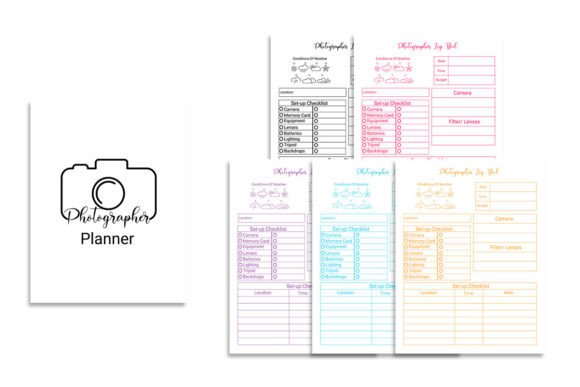
At its simplest level, a Photographer Planner helps you organize the chaotic mix of client sessions, editing deadlines, gear maintenance, creative concepts, and personal projects that define a photography career. But a well-designed planner goes deeper. It structures the way you think about your work, from the initial inquiry call to the final delivery of images. The best planners treat photography as both an art and a business, offering dedicated spaces for shot lists, lighting diagrams, budget tracking, equipment checklists, and even client communication logs.
When you download a comprehensive Photographer Planner, you typically receive a suite of file formats that allow you to work the way you prefer. AI files give you editable vector artwork inside Adobe Illustrator, ideal for customizing cover designs or adding your logo. PDF files are ready for immediate printing or digital annotation on tablets using apps like GoodNotes or Notability. SVG files offer scalable graphics for cutting machines or further design work. And the high-resolution CMYK color at 300 DPI ensures that anything you print looks sharp, vibrant, and professional—no pixelation, no washed-out tones.
Who Actually Needs One
It is tempting to think that planners are only for busy wedding photographers or high-volume portrait studios. In reality, the Photographer Planner serves a much wider audience.
Freelance and Independent Creators
If you shoot on your own, managing every aspect of a session—from scheduling to invoicing to editing—can quickly become overwhelming. A planner helps you keep track of each stage without relying on memory or scattered sticky notes. Many freelancers find that the simple act of writing down a plan reduces anxiety and improves the final result.
Small Business Owners
Photography studios with even one or two employees need systems. A Photographer Planner can serve as a central hub for team schedules, equipment loans, and client preferences. When your assistant can see the week's sessions at a glance, miscommunications drop and efficiency rises.
Hobbyists and Enthusiasts
Even if photography is not your primary income, a planner helps you grow deliberately. Instead of shooting randomly, you can track which techniques you are practicing, which locations you have scouted, and which genres you want to explore next.
Online Content Creators
Bloggers, YouTubers, and social media photographers often juggle content calendars, brand collaborations, and personal projects. A Photographer Planner tailored to visual work helps you map out shoots in advance, ensuring you never scramble for a post idea the night before.
Real-World Scenarios Where It Shines
To understand the value of a Photographer Planner, consider a few concrete situations.
Scenario one: A wedding photographer has three weddings in one weekend. Without a planner, details blur together—the bride who wanted golden-hour portraits, the couple allergic to formal poses, the venue with the tricky indoor lighting. With a planner, each session gets its own page: timeline, shot list, special requests, and contact numbers. Even in the chaos of a busy season, nothing slips through the cracks.
Scenario two: A real estate photographer needs to photograph five properties in two days, each with different lighting conditions and client specifications. The planner holds floor plans, measurement notes, preferred angles, and editing instructions. The photographer moves through each property efficiently, knowing exactly what is needed.
Scenario three: A portrait photographer wants to develop a personal project exploring natural light in urban environments. The Photographer Planner becomes a creative journal, where mood boards, location scouting notes, and lighting experiments are recorded alongside reflections on what worked and what did not. Over months, this builds into a portfolio of intentional work, not accidental snaps.
Strengths That Matter Most
Not all planners are created equal. A quality Photographer Planner offers distinct advantages that make it worth incorporating into your routine.
- Comprehensive session management: Dedicated sections for client details, contact information, session dates, and delivery timelines keep everything in one place. You never have to search through emails or DMs to find a phone number or address.
- Creative planning tools: Shot lists, composition sketches, lighting diagrams, and gear checklists help you visualize a session before you arrive. This reduces on-site indecision and increases your confidence.
- Business tracking: Expense logs, invoice records, tax preparation notes, and budget sheets transform your planner from a creative tool into a business asset. Many photographers report better financial clarity after using a dedicated planner for just one quarter.
- Customizability through file formats: The inclusion of AI, PDF, and SVG files means you can adapt the Photographer Planner to your exact workflow. Print it as a bound book, load it onto a tablet, or edit the digital files to add your own branding. The high-resolution CMYK color at 300 DPI ensures professional-grade print output every time.
Considerations and Limitations
Honest evaluation requires acknowledging where a Photographer Planner might not be the perfect fit for everyone.
Digital-first photographers who rely entirely on cloud-based project management tools may find a printable planner redundant. However, many users report that the tactile act of writing improves memory and reduces screen fatigue. A hybrid approach—using a planner for ideation and a digital system for storage—often works best.
Strict budget constraints may make an all-in-one planner seem like an unnecessary expense. Yet the downloadable format keeps costs low compared to pre-printed planners, and the reusable structure means you print only what you need, when you need it.
Learning curve is minimal, but adopting any new system requires intention. A Photographer Planner works best when you commit to using it consistently for at least a few weeks. Those who try it for one session and abandon it seldom see the full benefit.
Over-organization can stifle spontaneity for some creative photographers. If you prefer to shoot entirely by intuition, a detailed planner might feel restrictive. The solution is to use only the sections that serve you—no rule says you must fill every page.
How to Evaluate if a Photographer Planner Is Right for You
Choosing a Photographer Planner should be a deliberate process. Here is a practical framework to guide your decision.
- Audit your current workflow. What do you currently use to plan shoots? Calendars, sticky notes, email folders, your memory? Identify the gaps where things get lost or forgotten.
- Define your primary use case. Are you planning client sessions, personal projects, or both? Do you need business tracking features or pure creative space? Your answer will determine which sections of a planner matter most.
- Consider your medium. Do you prefer digital annotation on a tablet, printed pages in a ring binder, or a bound notebook? The file formats in your download—AI, PDF, SVG—give you flexibility to create the exact physical or digital product you need.
- Test before committing. Print a few pages or load a sample onto your device. Use it for one real shoot. Notice whether it reduces stress or adds friction. A good Photographer Planner should feel like a support system, not a chore.
- Look for quality in the details. High-resolution CMYK color at 300 DPI is not a marketing gimmick—it ensures that your printed pages look professional, with crisp text and accurate color representation. If you plan to print and bind, this matters enormously.
Beyond Organization: The Deeper Value
Using a Photographer Planner consistently does more than keep you organized. It trains you to think like a professional. Over time, you develop the habit of anticipating problems before they arise. You start each shoot with clarity about what you want to achieve. You finish each session with a record of what worked and what you want to improve.
For many photographers, this shift from reactive to proactive planning is what separates occasional frustration from steady growth. The planner becomes a quiet mentor, reminding you of the questions you should ask, the details you should confirm, and the creative risks you planned to take.
Practical Expectations for First-Time Users
If you are new to using a dedicated Photographer Planner, set realistic expectations. The first few weeks may feel awkward as you develop a rhythm. You might overfill pages or leave sections blank. That is normal. The goal is not perfection, but consistency.
Start with one section that addresses your biggest pain point. If you often forget gear, begin with the equipment checklist. If you struggle with client communication, use the contact and briefing pages. As you build confidence, gradually incorporate additional sections.
Remember that the file formats included in your download—AI files for editable design, PDF files for print or tablet use, SVG files for scalable graphics—give you freedom to modify the planner to suit your evolving needs. You are not locked into someone else's system. You are building your own.
Final Thoughts on Making the Choice
A Photographer Planner is not a magic solution. It will not take better photos for you, and it cannot replace skill or creativity. What it can do is remove the noise that distracts from your best work. When the logistics of running a photography business are handled, your mind is free to focus on light, composition, and connection with your subject.
Whether you are a seasoned professional juggling multiple clients or a hobbyist seeking deeper intentionality, the right planner supports your growth without adding complexity. The availability of AI, PDF, and SVG files in high-resolution CMYK color at 300 DPI ensures that you can shape the tool to fit your life, not the other way around.
Take the time to explore what a Photographer Planner can offer. Try it for a few sessions. Notice the difference in your preparation, your confidence, and your final images. You might find that the simplest tool—a well-designed page for your plans—is the one that makes the biggest difference.